
Why Over-Breathing Can Cost You Performance
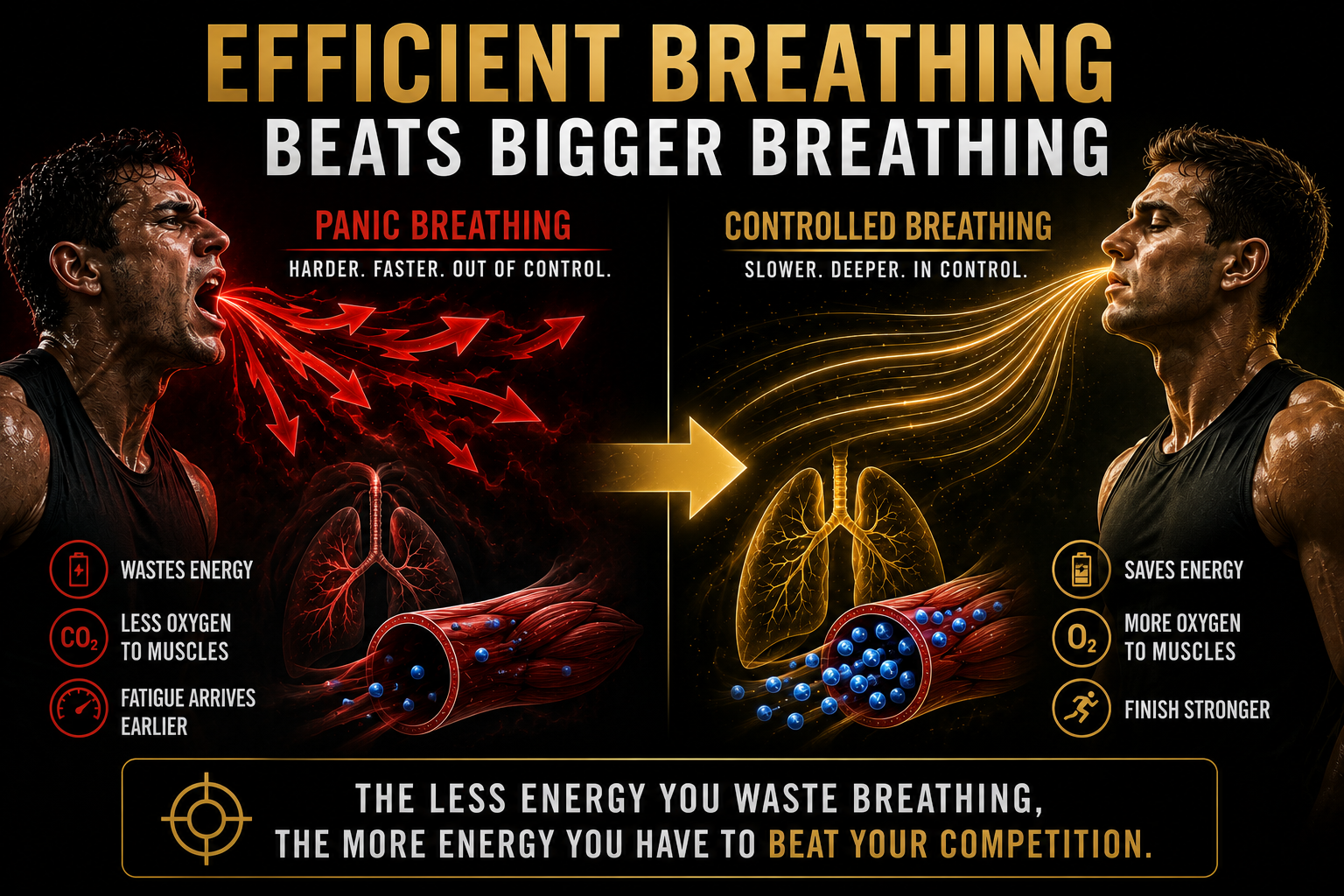
When the intensity rises, most athletes do the same thing.
They breathe harder.
It feels natural.
It feels necessary.
But breathing harder isn't always breathing better.
Many athletes start over-breathing long before their body actually needs it.
Instead of helping performance, they waste valuable energy on breathing that doesn't improve oxygen delivery.
Even worse, over-breathing can reduce carbon dioxide levels too quickly.
When this happens, haemoglobin holds onto oxygen more tightly, making it harder for your working muscles to access the oxygen they're demanding.
The result?
Your breathing becomes less efficient.
Your breathing muscles work harder.
You waste more energy.
Fatigue arrives sooner.
Performance starts to decline.
The world's best athletes don't simply train to be fitter.
They train to stay in control when the pressure is highest.
Instead of reacting to fatigue, they control their breathing.
Instead of panicking, they stay composed.
Instead of wasting energy, they direct it where it matters most—into speed, power, skill and execution.
This is one of the reasons breath hold training has become a valuable tool in high-performance sport.
It helps athletes become more comfortable as carbon dioxide rises, allowing breathing to stay controlled, efficient and matched to the demands of competition.
The result is simple.
Less energy wasted on breathing.
More oxygen delivered to working muscles.
More energy available for performance.
When the competition begins to fade, you're still moving with speed, power and precision.
Performance takeawayChampionships aren't won by the athlete who breathes the hardest.
They're won by the athlete who breathes most efficiently.
The less energy you waste on breathing, the more energy you have for what actually wins competition—running faster, hitting harder, making better decisions and finishing stronger than your opponent.