

THE VINCERE™ PROTOCOL™
bolt score
THE ONE PERFORMANCE METRIC YOUR COMPETITION ISN'T MEASURING.
You measure speed. Strength. Power. VO₂ max. Heart rate. Body composition.
But none of those tell you how efficiently you breathe when fatigue begins to decide the outcome.
That's what the BOLT Score measures.
WHAT IS THE BOLT SCORE?
The Body Oxygen Level Test (BOLT) is a simple measurement of your breathing efficiency.
It doesn't measure how big a breath you can take. It measures how efficiently your body functions before it demands the next breath. In elite sport, that matters.
Because the athlete who breathes more efficiently usually wastes less energy, recovers faster and stays composed when everyone else begins to fatigue.
the test

1 breathe
Take a normal, gentle breath in through your nose. Follow with a normal, gentle breath out through your nose.
2 hold
At the end of the exhale, pinch your nose closed with your fingers and start the timer.
Hold your breath until you feel the first definite urge to breathe.
This Is Not Your Maximum Breath Hold.
This might be: A small contraction in your diaphragm, abdomen, or throat. The first clear signal from your body that it wants to breathe.

3 time
As soon as you feel that first urge, stop the timer, release your nose, and breathe in gently through your nose.
Your first breath should be calm and controlled not a gasp. The number of seconds on the timer is your BOLT Score.

Imagine two athletes. Same strength. Same speed. Same conditioning. Same skill. One is still explosive in the final quarter. The other is hanging on. The difference isn't always fitness. Sometimes it's breathing efficiency.
Your respiratory system determines how much energy breathing costs during competition.
The more efficient it becomes, the more energy remains available for movement, decision making and execution when fatigue is highest.
how do you score?
your bolt score in seconds
what to expect
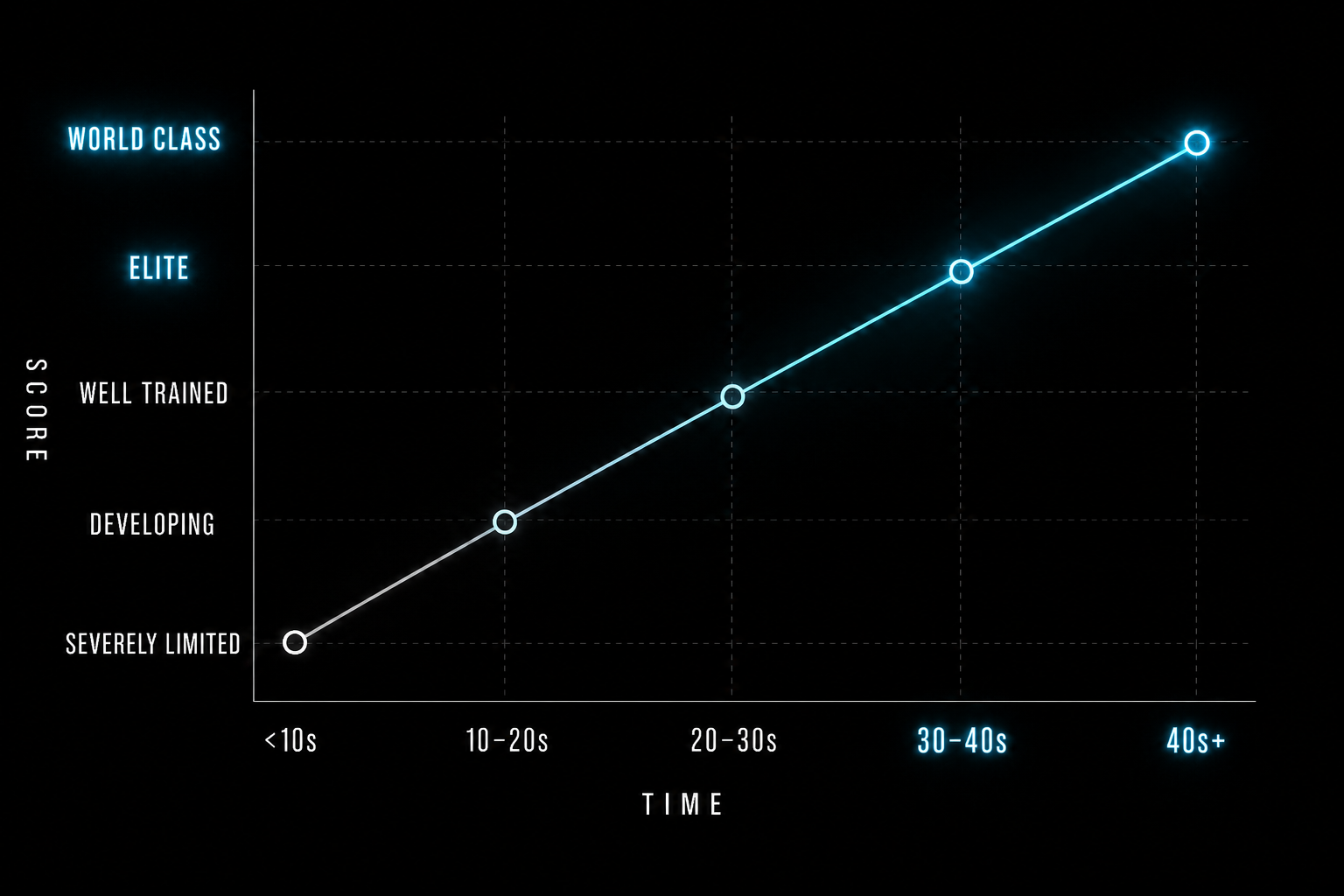
Your scoreunderstand
<10 SECONDS severely limited
Breathing is working against you.
High effort. Low energy. Poor recovery.
10-20 SECONDS developing
Below optimal efficiency.
Fatigue hits sooner. Recovery is slower.
20-30 SECONDS well trained
Relatively efficient breathing.
Room to improve endurance & composure.
30-40 SECONDS elite
Efficient breathing.
Better recovery. Greater control under pressure.
40 SECONDS+
world class
Effortless, controlled breathing.
Sustained performance at the highest level.
-
Your breathing is dysfunctional.
Breathing is often noisy, irregular, and excessive, even at rest. You may sigh, yawn, breathe through your mouth, or wake feeling unrefreshed despite a full night's sleep.
indicates very poor tolerance to carbon dioxide and an overactive breathing response. This creates unnecessary physiological stress, reduces oxygen delivery to working muscles, and limits physical performance.
Your breathing is compromised.
Breathing may be affected by nasal obstruction, frequent coughing, wheezing, or habitual mouth breathing. Recovery is slower, concentration declines sooner, and fatigue appears earlier during exercise.
Most recreationally active people fall within this range. Improving your BOLT score will reduce breathing effort, improve recovery, increase energy, and build a more efficient respiratory system.
-
Your breathing may be compromised by nasal congestion, wheezing, or poor sleep quality. Energy and concentration are likely affected. Focused breathing exercises will improve your sleep, reduce breathlessness, and enhance fitness.
-
Your breathing is functional but has room to improve.
Breathing is generally quiet, calm, and controlled during rest. A BOLT score around 20 seconds is common among moderately active individuals.
However, this is not an elite standard.
Every five-second increase represents improved carbon dioxide tolerance, greater breathing efficiency, reduced breathlessness during exercise, and improved endurance.
-
Your respiratory system is becoming highly efficient.
Breathing remains light and controlled under increasing physical demand. The respiratory muscles require less energy, allowing more oxygen to be delivered to the muscles that matter most.
Recovery improves, breathing remains calmer under pressure, and endurance continues to increase.
This is where noticeable performance gains begin to separate athletes from the average population.
-
Elite breathing efficiency.
A BOLT score of 40 seconds is considered the benchmark for optimal breathing function.
Your sensitivity to carbon dioxide is significantly reduced, allowing the brain's breathing centre to remain calm under stress. Breathing becomes slow, quiet, and efficient at rest and remains controlled during moderate to high-intensity exercise.
At this level you can expect:
Minimal unnecessary breathing effort
Superior oxygen delivery to working muscles
Improved nervous system regulation
Faster recovery between sprints
Reduced breathlessness under fatigue
Greater endurance and exercise economy
A stronger foundation for efficient breathing during aerobic training and recovery.
A higher BOLT score reflects a respiratory system that wastes less energy on breathing and more energy on performance. For elite athletes, this translates directly into greater efficiency, improved recovery, and a competitive advantage when fatigue begins to decide the outcome.
what you TRAIN
nasal breathing
Improve nitric oxide production to support more efficient oxygen delivery and better breathing mechanics.
BREATHING EFFICIENCY
Better recovery. Greater control under pressure.
CARBON DIOXIDE TOLERANCE
Train your breathing system to remain controlled as carbon dioxide rises, reducing the tendency to react with unnecessary over breathing.
DIAPHRAGM STRENGTH
Strengthen the primary muscle of breathing so less energy is spent moving air during high-intensity exercise.
FASTER RECOVERY
RUse controlled breathing strategies to regain breathing control between sprints, rounds, sets and high-intensity efforts.
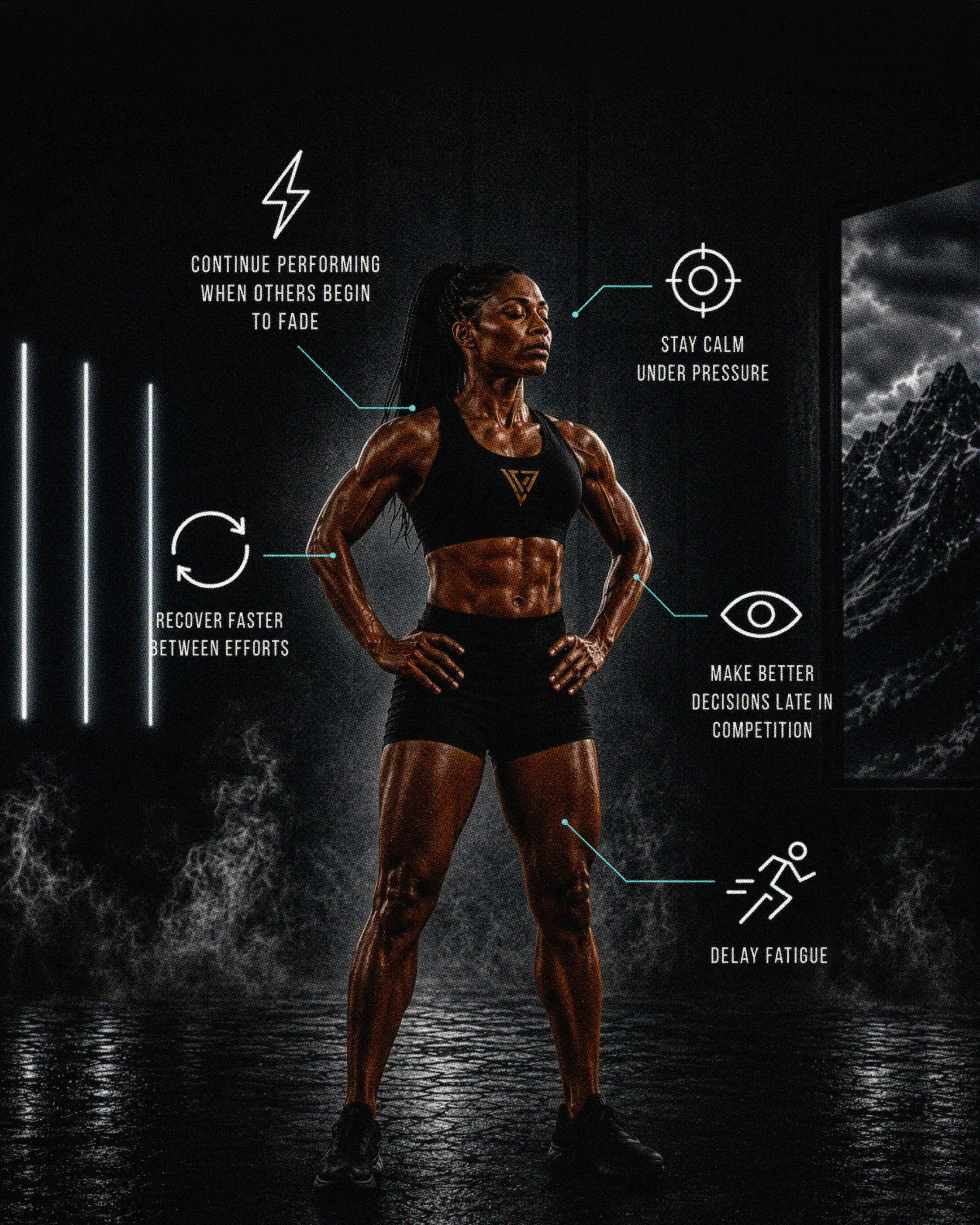
Outcomes
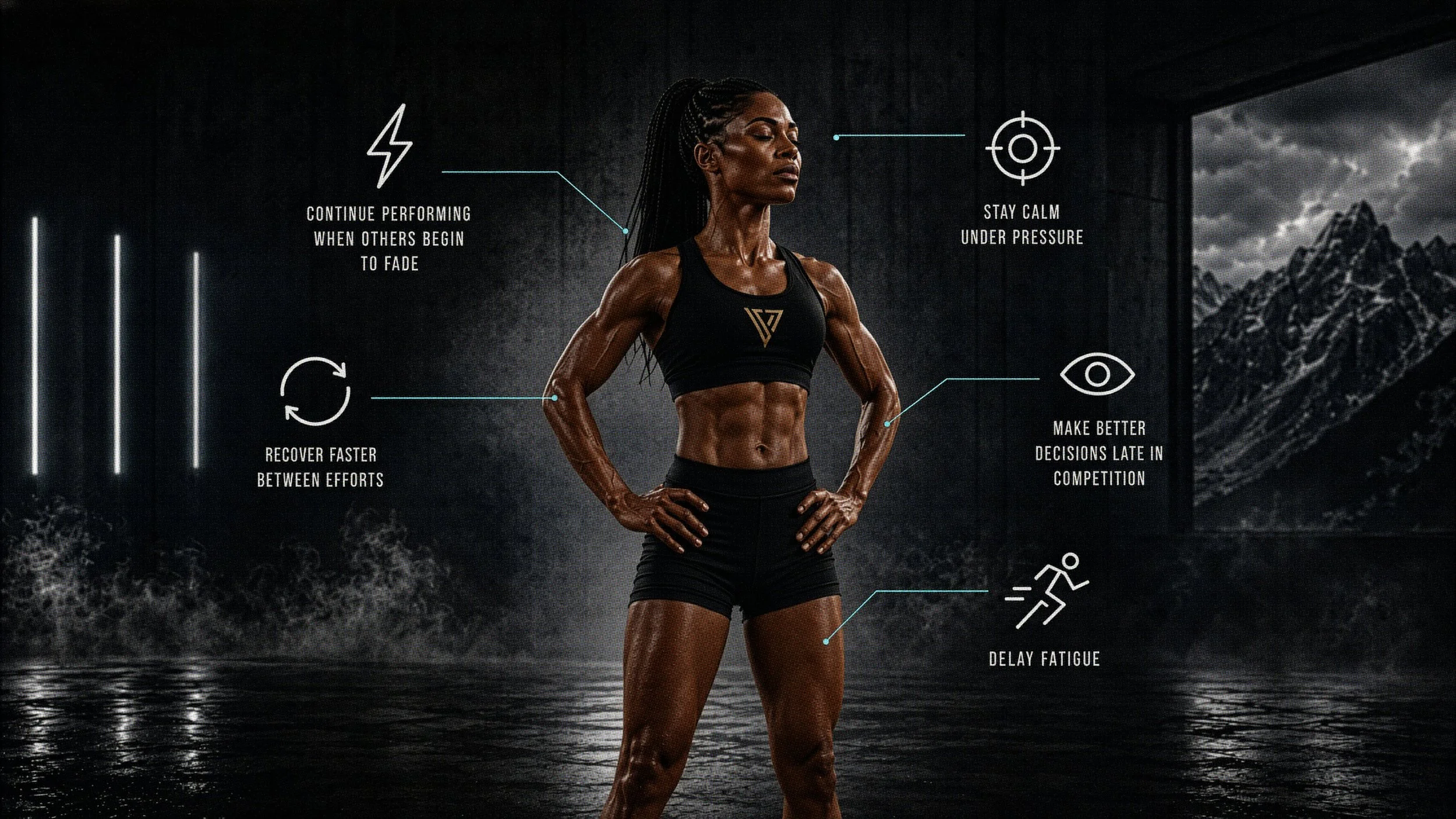
BUILT IN ELITE PERFORMANCE ENVIRONMENTS
The VINCERE Protocol™ has been refined through years of work with elite sporting organisations and high-performance environments. This isn't built on theory. It's built on performance.







Take control of your breathingUNLOCK YOUR PERFORMANCE
Every athlete breathes.
Very few measure how efficiently they breathe.
The BOLT Score gives you a simple, objective benchmark of one of the most overlooked systems in elite sport.
Because championships aren't won by the athlete who starts the fastest.
They're won by the athlete who is still performing when the pressure, fatigue and intensity are at their highest.